Every night thousands of players sit at a computer screen, click a button, and hope that the next spin, roll, or hand will finally break the streak of losses. The promise of a flawless system, whether it is a betting progression, a perfect card‑count, or a secret algorithm, travels faster than any new slot release. Yet the mathematics that drive modern online casinos, the strict regulations governing bonuses, and the very nature of random number generators keep the dream of a guaranteed win out of reach.
The mathematics behind random outcomes in casino games
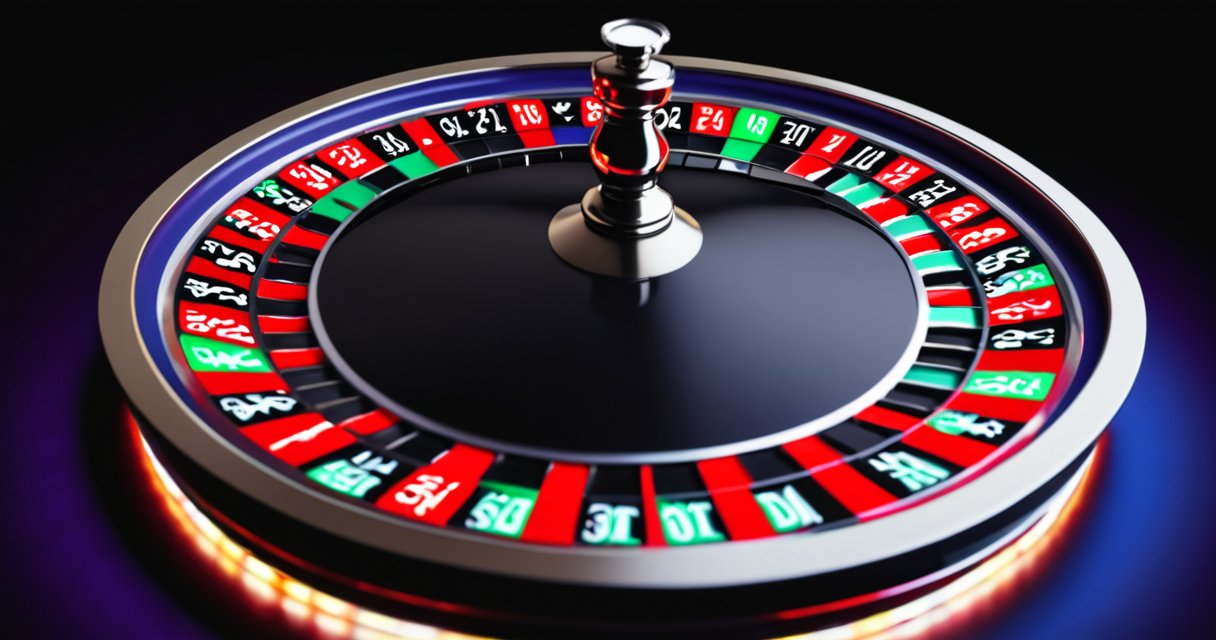
Online games rely on cryptographically secure random number generators (RNGs) that produce numbers indistinguishable from pure chance. In a roulette wheel, each spin has a fixed probability: a single number appears roughly once every 37 spins on a European wheel. Video slots use new slot mechanics, where each reel stop follows a weighted algorithm to ensure a specific return-to-player percentage. Because each event is independent, the odds of the next spin do not improve because the player has lost the previous one.
According to probability theory, the house edge in table games ensures the expected value of a bet always favors the casino. For example, a slot with an RTP of 96 % returns $96 for every $100 wagered, on average. The remaining $4 represents the house edge, a built‑in profit margin that cannot be erased by any betting pattern. Over millions of spins, the law of large numbers forces the actual return to converge on this percentage, regardless of how the player chooses to bet.
Why popular betting systems fail in practice
The Martingale system, perhaps the most infamous, asks the player to double the stake after each loss until a win recovers all previous losses plus a profit equal to the original bet. Mathematically, the system assumes an infinite bankroll and no betting limits. In reality, most online platforms enforce maximum bet caps, and even a modest losing streak can exhaust a player’s funds before a win arrives. A sequence of ten losses on a $1 bet would require a $1,024 wager on the eleventh round, an amount many players simply cannot sustain.
Other approaches, such as the Fibonacci progression or flat betting based on perceived “hot” numbers, share the same flaw: they ignore variance. A single unlucky session can produce results far outside the range predicted by the progression, wiping out any short‑term gains. The illusion of control disappears the moment the RNG produces a result that does not follow the player’s expected pattern.
The role of house edge and variance in long‑term results
Every casino game carries a built‑in advantage that varies from 0.5 % on blackjack with optimal play to over 15 % on many novelty slots. This edge is the source of the casino’s profit, and it persists regardless of how the player structures bets. Variance, the statistical measure of result swings, amplifies the edge over time. A game with high variance, such as progressive jackpot slots, can deliver huge payouts but also produces long stretches of small or zero wins, making any deterministic strategy futile.

Consider a player who wagers $100 on a 5‑minute slot session with a 2 % house edge. The expected loss is $2, yet the actual outcome could be a $50 win or a $80 loss. The larger the number of spins, the closer the cumulative loss will align with the 2 % edge, erasing any temporary advantage gained by a betting system.
How online bonus terms reinforce the no‑guarantee reality
Casinos attract new players with welcome bonuses, while regular slot game updates keep the experience fresh and engaging. These incentives come with wagering requirements, typically 20 to 40 times the bonus amount, that force the player to place a certain volume of bets before cashing out. The requirements are calibrated to the house edge of the eligible games, ensuring that even the most aggressive betting strategy cannot bypass the statistical advantage held by the casino.
For instance, a $100 bonus with a 30× wagering condition on a slot with an RTP of 95 % obliges the player to wager $3,000. Even if the player uses a progressive betting system, the expected loss on that volume of play is $150, a figure that no bonus can offset. The bonus therefore acts as a controlled experiment that demonstrates the impossibility of a guaranteed win.
Player psychology and the lure of a “sure thing”
The human brain is wired to spot patterns, even where none exist. After a losing streak, many gamblers recall a single lucky spin and convince themselves that a particular number or sequence will soon repeat. This cognitive bias fuels the search for a flawless system, because it offers a sense of predictability in an otherwise random environment. Marketing materials that promise “proven methods” or “secret formulas” exploit this bias, drawing players deeper into the cycle of hope and disappointment.
Social media and online forums amplify the effect. Stories of a player who turned a $10 stake into a $5,000 win spread quickly, while accounts of the countless others who lost the same amount remain invisible. The selective visibility of success creates a false narrative that a guaranteed strategy exists, even though the underlying probabilities remain unchanged.
Risk management tools that improve odds without promising wins
While no system can eliminate the house edge, disciplined bankroll management can reduce the risk of catastrophic loss. The Kelly criterion, for example, advises betting a fraction of the bankroll proportional to the edge and the odds offered. Applied to a blackjack game with a 1 % advantage, the formula suggests wagering roughly 1 % of the bankroll each hand, preserving capital over long sessions and smoothing out variance.

Another practical tool is setting loss limits and win targets before logging in. By defining a maximum loss of, say, 10 % of the bankroll and a win target of 20 %, the player can walk away before the statistical advantage reasserts itself. These practices do not guarantee profit, but they provide a structured approach that respects the mathematical reality of the games.
What responsible players should focus on instead of guaranteed strategies
The most reliable path to enjoyment in iGaming is to treat each session as entertainment rather than investment. Selecting games with a higher RTP, such as certain video slots that exceed 98 %, can improve the expected return, while still accepting that losses are part of the experience. Understanding Probability fundamentals in casino games is crucial for effective risk management, alongside bonus terms and wagering cost calculations.
Finally, embracing the uncertainty that defines gambling removes the pressure to find a perfect system. When the focus shifts to fun, responsible budgeting, and the occasional thrill of a big win, the allure of a guaranteed strategy fades. The mathematics stay the same, but the player retains control over how much time and money to invest, ensuring that the pursuit of wins remains a source of pleasure rather than distress.

I have spent the last decade exploring the intersection of competitive gaming and the evolving landscape of online casinos. My passion lies in dissecting iGaming mechanics and hunting down the most transparent bonus offers for players.
Leave a Reply