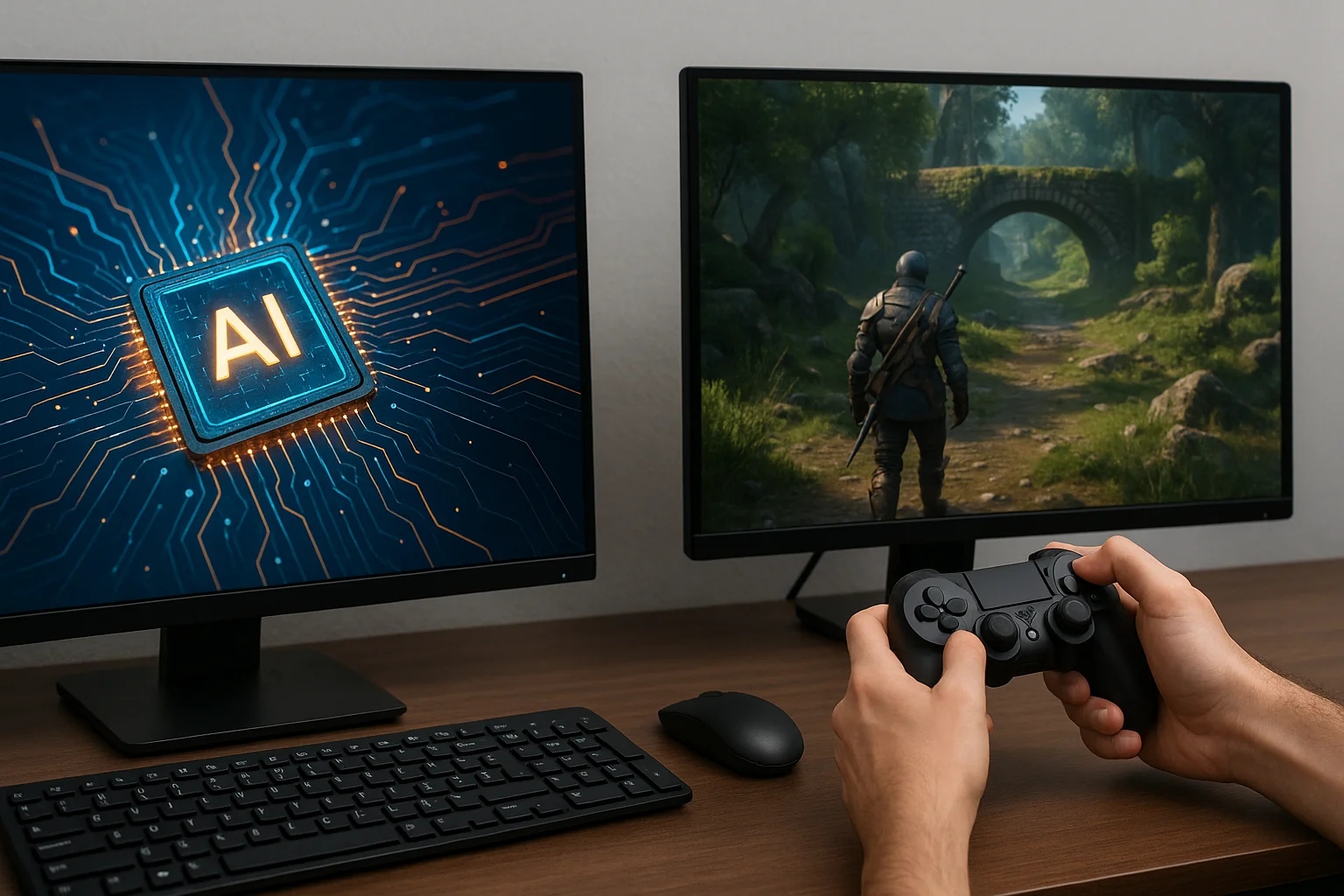
AI is Reshaping the Game Development Landscape
Artificial Intelligence is no longer a futuristic concept limited to sci-fi narratives—it has become a dynamic and integrated component of modern game development. AI’s influence stretches from early ideation and asset creation to real-time gameplay mechanics, altering how developers create worlds and how players interact with them. By streamlining repetitive tasks and enabling smarter tools, AI frees up human creativity for more ambitious game design.
The modern game development pipeline is complex, requiring coordination between design, art, programming, and testing. AI assists by automating many of these processes. For example, procedural content generation can create expansive environments without manual modeling, while AI-based animation tools can craft realistic character movements based on minimal input. These innovations not only reduce production time but also open creative avenues previously considered unfeasible.
Enhancing NPC Behavior with Intelligent Systems
One of the most tangible impacts of AI in games is on Non-Playable Characters (NPCs). Traditionally, NPCs relied on scripted behavior trees, leading to repetitive and predictable actions. With modern AI techniques like machine learning and neural networks, NPCs can adapt, learn, and react to players in more human-like ways.
Consider stealth games or open-world RPGs—players are now encountering enemies that learn from tactics, change patrol routes, or communicate intelligently within squads. AI-driven NPCs add strategic depth and replayability, as no two encounters feel identical. This emergent behavior has redefined expectations for immersion and interactivity in gameplay.
How AI Supports Creative Design in Games
Creativity in game development once depended entirely on the talents of human designers. Today, AI complements this creativity by acting as a collaborative partner. Tools powered by AI can suggest level designs, generate concept art, or provide intelligent dialogue options based on narrative context. These innovations enhance storytelling and gameplay mechanics without replacing the designer’s vision.
For narrative-rich games, AI models can generate branching dialogue trees that adapt to player choices, helping to sustain consistency across complex storylines. Similarly, AI assists artists by generating detailed textures, models, or lighting presets based on minimal user input. The result is a faster, more dynamic creative process that maintains artistic integrity.
Major Benefits of AI in Game Development
The adoption of AI in the game industry brings a host of benefits beyond just speed and efficiency. It fundamentally changes the production ecosystem by creating opportunities for innovation and personalization.
- Accelerated Development: AI can quickly generate assets, levels, or code snippets, reducing time-to-market for new titles.
- Cost Efficiency: Automating repetitive or technical tasks allows studios to allocate budgets more effectively.
- Higher Quality Testing: AI bots simulate diverse player behaviors, enabling comprehensive quality assurance before release.
- Adaptive Content: Real-time AI systems modify difficulty, narrative paths, or game events based on player performance and preference.
These advantages contribute to a more agile and responsive development cycle, making games not only better crafted but more attuned to the needs and preferences of players.
Personalized Gameplay and Dynamic Experiences
AI doesn’t just help developers—it also enhances player experience directly. AI algorithms are now used to personalize gameplay in real time. For example, difficulty levels can adapt based on player performance, ensuring that the challenge remains engaging without becoming frustrating. Dynamic music systems can respond to in-game events and emotional beats, enriching the atmosphere.
Furthermore, player behavior analysis allows AI to suggest quests, items, or activities tailored to individual playstyles. In multiplayer games, AI matchmaking systems ensure balanced and competitive environments. This personalization builds player loyalty and increases engagement over time.
Challenges of Integrating AI into Game Development
Despite its many advantages, integrating AI into the game development process comes with challenges. Training machine learning models requires significant data, computational resources, and tuning. Additionally, AI can sometimes produce unpredictable or undesired outcomes, requiring human oversight and adjustment. Developers must carefully balance automation with creative control.
Another challenge lies in the ethical use of AI-generated content. As tools become more powerful, concerns about originality, copyright, and labor displacement arise. Studios must create frameworks for ethical usage, ensuring AI supports rather than replaces human talent.
Examples of AI Transforming Modern Games
Several contemporary games showcase how deeply AI can influence both design and gameplay. From smarter enemy behavior to procedurally generated environments, AI-driven features are becoming mainstream.
- Middle-earth: Shadow of Mordor: Its Nemesis System uses AI to remember player actions and adapt enemy behavior accordingly.
- No Man’s Sky: The game leverages procedural generation to create an expansive universe with billions of planets, all powered by AI algorithms.
- Left 4 Dead: The AI Director dynamically adjusts enemy spawns and item placement based on the player’s situation, enhancing pacing and tension.
- AI Dungeon: This text-based game uses GPT-powered models to create endlessly variable stories based on user input.
These examples highlight the diversity of AI’s application and its role in creating experiences that evolve and respond to the player’s journey.

I have spent the last decade exploring the intersection of competitive gaming and the evolving landscape of online casinos. My passion lies in dissecting iGaming mechanics and hunting down the most transparent bonus offers for players.
Leave a Reply